
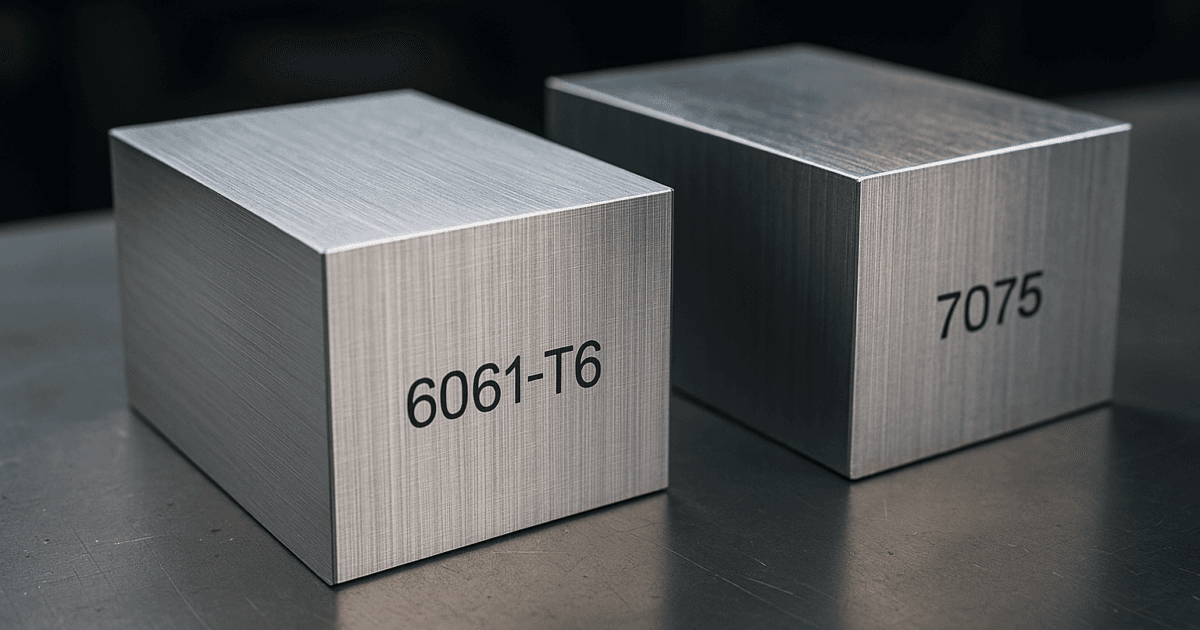
In the world of CNC machining and aluminum production, 6061-T6 and 7075 alloys are widely used materials. Both alloys offer unique properties that make them suitable for various applications in machine building and OEM production. The choice between aluminum 6061 or 7075 depends on factors such as strength, weight, corrosion resistance, and machinability. In this blog post, we delve deeper into these aspects and what they mean for your project.
Aluminium 6061-T6: Versatility and Corrosion Resistance
Aluminium 6061-T6 is one of the most popular aluminium alloys, primarily due to its versatility. It offers a good balance between strength and machinability and has excellent corrosion resistance. These properties make it an excellent choice for applications where durability and resistance to environmental factors are essential, such as in maritime and infrastructure projects.
6061-T6 has a tensile strength of approximately 310 MPa and a yield strength of 276 MPa. The alloy is easy to weld and anodize, which contributes to its versatility in various industries. The machinability of aluminium 6061 is also an advantage; it offers good surface quality with a typical Ra value of 0.8 to 1.6 microns.
Aluminium 7075: High Strength and Applications
Aluminium 7075 is known for its high strength-to-weight ratio. With a tensile strength of approximately 572 MPa and a yield strength of 503 MPa, 7075 is one of the strongest aluminium alloys available. These properties make it ideal for high-performance applications in aerospace, where weight and strength are crucial.
Despite its strength, 7075 is less resistant to corrosion than 6061. This makes it less suitable for use in humid environments without additional surface treatments such as Cerakote. Additionally, 7075 is more difficult to machine, which affects production costs and the required CNC tolerances. Machinability is moderate, with an Ra value that is typically higher than that of 6061.
Price Comparison and Economic Considerations
The choice between aluminium 6061 and 7075 is not only a technical but also an economic decision. Aluminium 7075 is generally more expensive than 6061, in terms of both purchase and processing costs. The higher alloying elements in 7075, such as zinc, account for the increased price.
At Monk Machining, we understand that cost control is crucial for your projects. It is important to carefully evaluate your project requirements and strike a balance between performance and cost. Choose 6061 for general applications where cost and corrosion resistance play a greater role. Choose 7075 when high strength and performance are the priority, even if that entails higher costs.
Conclusion: Which Alloy Do You Choose?
The choice between aluminium 6061 and 7075 depends heavily on the specific requirements of your project. Aluminium 6061 offers versatility and cost-effectiveness, ideal for general applications and environments where corrosion resistance is required. Aluminium 7075, on the other hand, is the best choice for demanding projects that require high strength.
At Monk Machining, we specialize in processing both aluminium 6061-T6 and 7075, and we can advise you on the best material choice for your specific application. Our advanced CNC facilities ensure that we can produce your parts with precision and quality, regardless of the chosen alloy.