
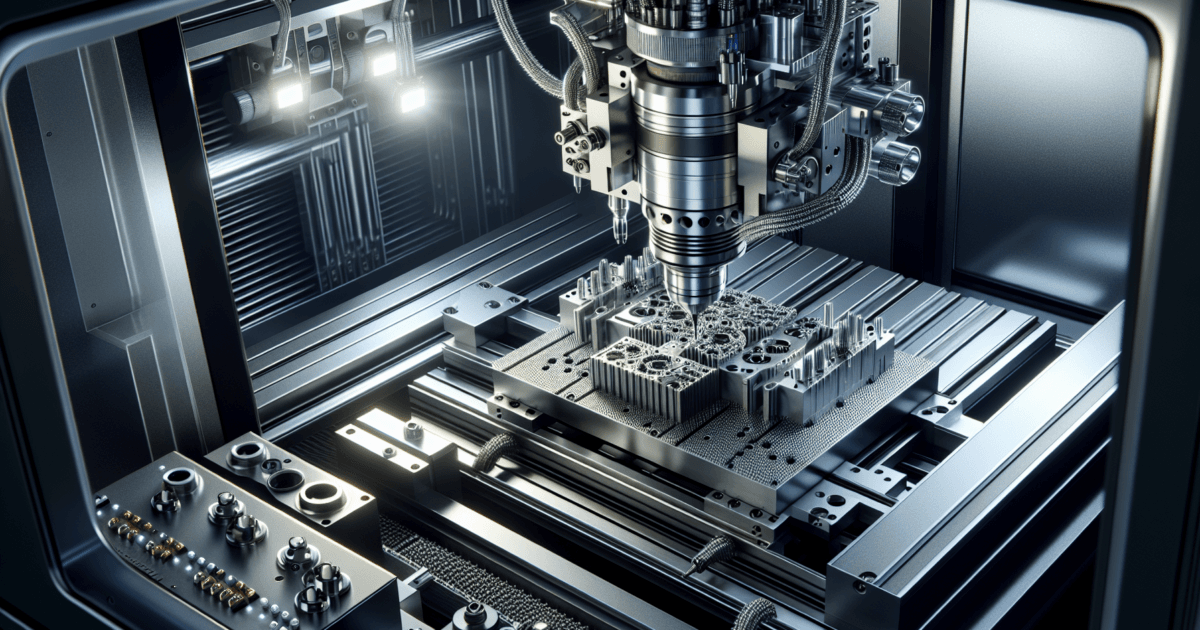
Trade policy in the CNC industry has a direct impact on material costs. Consequently, a changed tariff landscape alters not only the purchase price of aluminium but also the strategic choices companies make regarding their production and supply chain. Below, we discuss the key consequences.
Impact of changed rates
The U.S. Supreme Court's ruling on the government's authority to set tariffs has implications for the CNC industry. As Congress regains control over taxes and tariffs, a more predictable trading climate emerges.
For companies dependent on imports, this potentially means lower costs for imported materials and components. More important than the price level itself, however, is predictability: this makes long-term agreements with suppliers feasible again.
Consequences for aluminium supply
Aluminium is one of the essential materials in CNC production. Its availability and price are strongly influenced by international trade policies and mining activities. In particular, aluminium 6061-T6, widely used for its strength and corrosion resistance, can benefit from a streamlined supply chain and lower import costs.
Additionally, the ending of emergency tariffs and expanded mining in the United States could lead to a more reliable supply of materials such as cobalt and copper. This offers opportunities for sectors such as aerospace and the production of industrial turbines, which are heavily dependent on high-quality materials.
Tariff engineering as a strategy
In addition to awaiting policy changes, companies can take control through tariff engineering. This involves strategically adjusting products, processes, and value chains to minimize customs costs while simultaneously increasing resilience.
This requires insight into the classification of components and where value is added. Smart adjustments not only reduce costs but also decrease sensitivity to the next policy change.
Brand-independent automation
In the CNC industry, the focus is shifting towards automation that is not strictly tied to a single machine brand. This offers manufacturing companies greater flexibility and prevents them from getting bogged down in the technical complexity of systems linked to a single supplier.
For companies that are renewing their machinery step by step, that independence is a concrete advantage when expanding capacity.
Materials: aluminium alongside resin
In addition to traditional materials such as steel, stainless steel, and aluminum, synthetic resin is being used increasingly often in the metal industry. Synthetic resin offers advantages in terms of weight and corrosion resistance, making it attractive for specific applications.
Progress is also visible in drive technology. Through precision machining, improved materials, and smart lubrication, the performance of gearboxes is increasing and backlash is reduced, which directly impacts the accuracy of the final product for machine builders.
Sustainability in 3D printing
Innovations in material use demonstrate how production costs and sustainability can go hand in hand. The launch of Filamentive’s rPA12 filament, made from recycled MJF powder waste, underscores the growing focus on reuse in additive manufacturing.
Training and knowledge sharing
The importance of technical training remains significant. Initiatives such as Methods Machine Tools’ National Center of Excellence offer hands-on training and foster the skills required in modern production environments. Without those skills, new technology remains underutilized.
Companies focusing on precision and efficiency in CNC machining can benefit from these changes by adapting their processes in a timely manner. At Monk Machining, we are happy to work with you to consider the implications for your material selection and supply chain.