
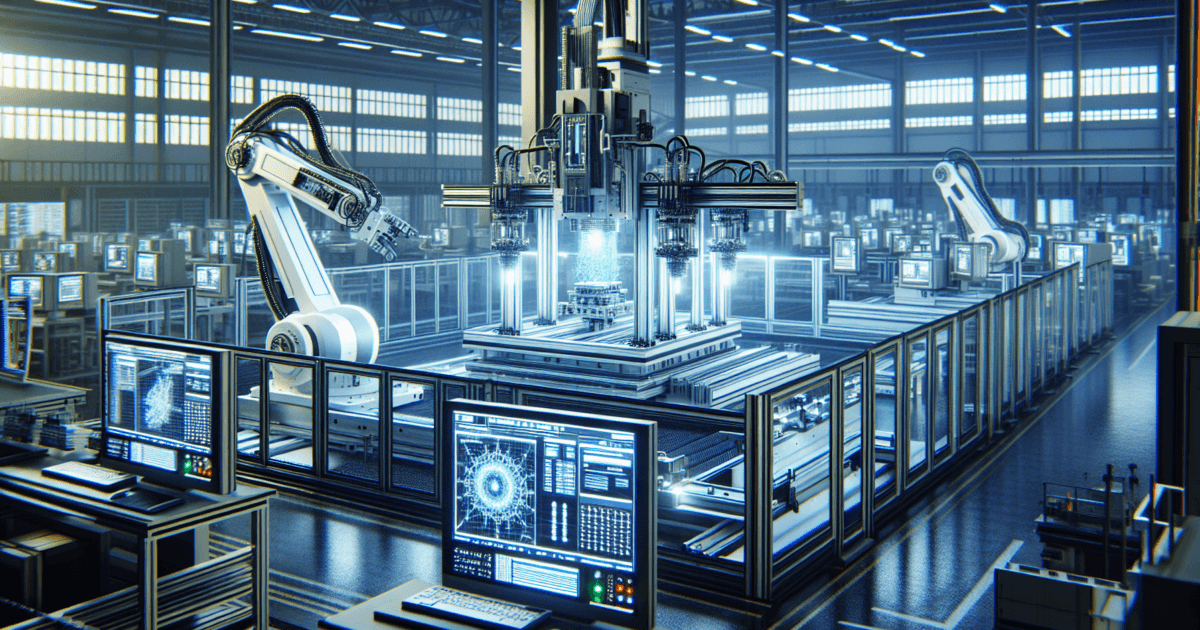
CNC machines have traditionally been designed for rigid materials and fixed machining paths. Adaptive motion systems break with that premise: machines measure, learn, and adapt during machining. This opens up applications that were previously out of reach.
The transformation of CNC systems
Adaptive motion systems enable machines to adapt to changing conditions. These developments were the focus of the Motion Systems Takeover Week, with an emphasis on coordination and adaptability.
The role of adaptive motion systems
These systems enable machines to make real-time decisions based on current production conditions. By combining advanced sensors with algorithms, the efficiency and accuracy of CNC machining are improved, particularly in situations where the material does not behave entirely predictably.
Kinematic mapping of non-rigid materials
Traditionally, machines have been designed for rigid materials, but the demand for technology that can handle flexible materials is growing. By combining high-resolution servo motors with precise couplings, machines can track and correct the position of flexible materials in real-time.
This approach is already being applied in the textile industry. The technique has the potential to find its way elsewhere as well, for example in the production of flexible electronics.
Challenges and solutions
Working with non-rigid materials presents its own challenges, such as unpredictable movements and variations in material stress. The solutions focus on guaranteeing accuracy and consistency, even with complex shapes and structures.
From casting to processing
The gap between casting and machining metal components is narrowing. By better aligning both processes, manufacturers can reduce waste, increase production speed, and lower costs without compromising on quality.
For OEM suppliers looking to streamline their supply chain, that alignment often yields greater returns than optimizing either process separately.
Strategic growth in the CNC industry
Acquisitions play a role in expanding production capacity. FMI's participation in Vovu Machining is an example of this: both companies increase their capacity and strengthen their market position.
Additive production as a supplement
In addition to adaptive CNC systems, additive manufacturing is gaining ground. Facilities where dozens of printers are deployed for rapid on-site production demonstrate the extent of its application.
3D printing makes it possible to produce complex parts quickly and cost-effectively, not only for prototypes but also for small series and custom work, from medical devices to automotive parts.
At Monk Machining, we integrate cutting-edge technologies such as adaptive CNC systems into our processes. Our team is happy to support you with your production challenges.